
Physical Science Lesson 1 Part 3 - When Molecules Meet: Energy in Reactions!
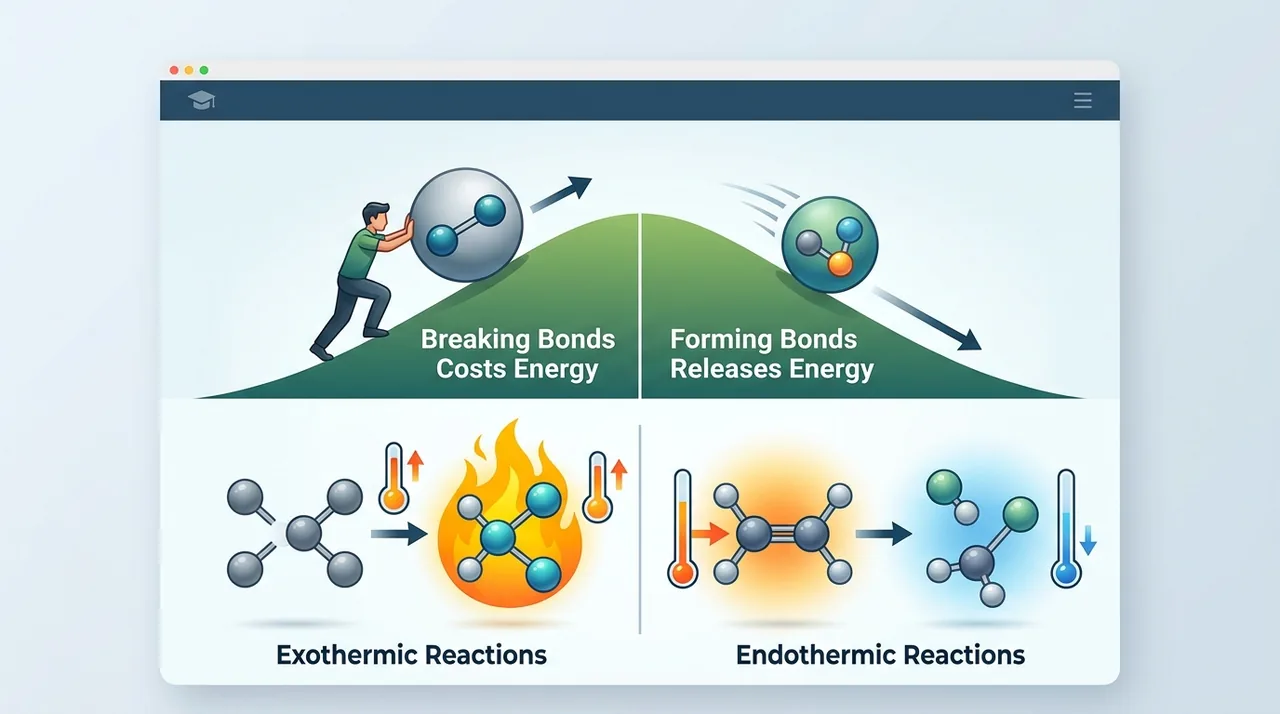
This is the final part in a 3-part lesson on Molecular Interactions. This part explains how energy drives chemical reactions, recapping the concepts of atoms and reaction types from previous lessons and tying them together. The start of the lesson focuses on chemical bonds, using a "ball on a hill" analogy to teach that: - Breaking bonds costs energy. - Forming bonds releases energy. This principle is then used to define the two main types of chemical reactions: - Exothermic: Reactions that release energy as heat, because more energy is released forming strong new bonds than it cost to break the old ones. - Endothermic: Reactions that absorb energy from their surroundings, because it costs more energy to break the old bonds than is gained by forming new, weaker ones.
